
Sermon on Epiphany
given by Revd Dr Elizabeth Welch at St. Andrew’s on January 4th 2026
Isaiah 60:1-6
Psalm 72:10-15
Ephesians 3:1-12
Matthew 2:1-12
Introduction to theme
Today’s the first Sunday of the New Year. It’s also the day when we are celebrating Epiphany – the coming of the wise men to Jesus. Epiphany is actually the 12th day of Christmas i.e. the 6th January, but we tend to celebrate it in the church as the Sunday nearest to this day.
It’s interesting to reflect as we start the New Year – do we look back over the past year or forward to the coming year?
When we look back, we can see a mix of things – some we rejoice in, others we’re saddened by – such as the death of loved ones or the suffering that has still been going on across the world.
As we look forward, are we tempted just to despair at what might lie ahead of us, or are we filled with hope, especially in terms of what God might yet be offering us and this troubled world?
Today, we both look back to the story of the three wise men and what it meant in those days, including some of the conflicts they went through, and what their lives still mean for us as we look to the future.
Most of all, we look to what it tells us about God’s love, as seen in the baby Jesus.
Sermon
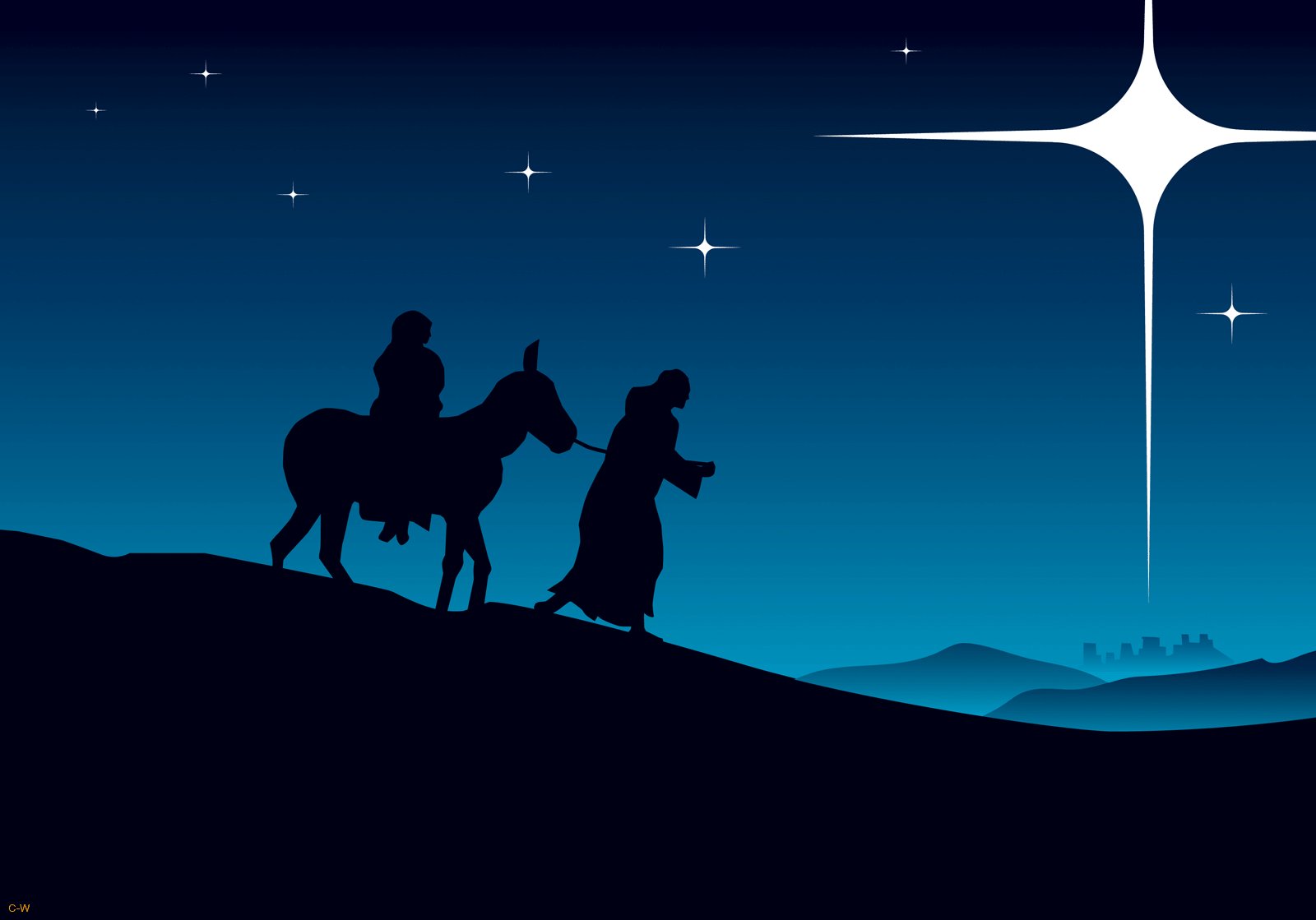
We’ve heard the reading about the coming of the wise men, and we have sung about them as kings. The wise men are also sometimes referred to as astrologers – people who interpret the stars to act as a guide to human life.
We don’t actually know if there were only three. We only think there were three because of three gifts being mentioned.
What the gospel specifies is that they have come from the east – in other words, they are not from Israel, they are not Jewish, they’re not even from the Roman Empire. It’s been suggested that they were Melchior, king of Persia; Gaspar, king of India, and Balthasar, king of Arabia.
But this is a later interpretation. There’s no mention of their names in Matthew’s gospel.
The Sunday on which we celebrate Epiphany leads us to see the wise men in four ways:
- firstly as travellers, following a star
- secondly as strangers from foreign lands
- thirdly as bringers of gifts, with no thought of reward
- fourthly, as people who were wise and able to discern the journey in front of them
Firstly, they were unexpected travellers. They set off to follow a star.
I guess it’s not quite the way we would set off today for a long and complicated journey. Following a star involves dreaming and trust, rather than organisation and planning. For the wise men, nothing was more important at this moment than that they took the time to follow this star. They were prepared to put the rest of their lives on hold to see where the star led.
It must have been a challenge – leaving their families and work behind. Yet it was also their destiny. For their journey was to lead to the revelation of God, in human form.
As we enter the New Year, it is time for us to reflect on the way in which we follow the star that leads us to Jesus, and how this is at the heart of the journey that we will make into the next year, even if we don’t know now precisely where we might end up.
Secondly, they were strangers from foreign lands. They in themselves were signs of the way in which God has come in Jesus for all people, not for one nation or race.
The wise men are signs of God’s universal love. God came for all of humanity, and all of creation.
The challenge for us is, as those who journey in Jesus’ way, that we become signs to others of God’s love for all people. And as a sign of this, we are called to live lives that are open to the stranger and the foreigner, to the person in distress and the refugee. We’re not just here to be with those we like and get on with. It’s been great to hear about the winter night shelter here at St Andrews, and to receive the warm words of thanks at what the church has done.
Thirdly, the wise men brought precious gifts, which they offered to the baby. These gifts weren’t just precious in themselves, they were signs of who this baby would be:
- the myrrh was offered as a sign of suffering, pointing to the suffering and cross of Christ. This birth was just the beginning of God’s revelation in human form in this world.
- The gold was offered as a sign of a king, pointing to the coming reign of Christ. But this baby, born in a stable, had come to bring about a different kind of kingdom to the earthly kingdoms all around. It’s a kingdom, not of power and authority, but of love and compassion equally poured out for all people.
- The frankincense was offered as a sign of prayer, pointing to the priestly intercession of Christ. This little one grew into an adult who prayed on his own, offered prayer for others including each one of us, and who invites us to join in his prayer.
The gifts offered by the wise men point to the way in which we’re each invited to offer whatever gifts we might have, however large or small, in service of others, as a sign of God’s love for people. Hearing about the wise men as we start the New Year offers us a reminder to look at our own lives, and see what different kind of gifts God has given each one of us.
Fourthly, the wise men were wise.
The wise men brought what they had, myrrh, frankincense and gold – three very specific gifts. But in addition to these gifts, they were identified as wise men, who were filled with the gift of wisdom.
They are wise, even though they have done something seemingly absurd. They have seen the star and followed it.
They are seeking God’s wisdom and prepared to travel to find it. They have come to the source of light, found unexpectedly in a stable; to a baby who is to be the light of the world. Then they take note of Herod, the local king, and the angel’s advice not to see him again. And we know that Herod eventually had it in for Jesus.
God’s wisdom challenges what can be seen as the wisdom of this world, in a whole range of different ways.
Psalm 72 is interesting for it is about the rule of the king. What’s striking is the way in which the psalm emphasises the king’s role in helping the poor, the weak, the needy and the oppressed. The king’s role isn’t to reign roughshod over the people; the king’s role is to be there for the poorest and the most vulnerable.
The church today is entrusted with God’s wisdom and called to live in this wisdom in ways which challenge the dominant motifs of the world around. We’re called to speak out about what government is really meant to be about and about the values that undergird our society, our thinking and our decision-making.
We are each called to be wise – not in the ways of the world, but in God’s ways.
The story of the birth of Jesus is full of mystery and wonder, of things that are very human and of things beyond human understanding.
In the Ephesians reading today: Paul writes about ‘the plan of the mystery hidden for ages in God who created all things; so that through the church the wisdom of God in its rich variety might now be made known’.
He says it’s a mystery
- because it cuts against our natural inclination to keep to our own kind
- it cuts against our desire to privatise God – to think that as long as I discover the God who is here for me, that’s enough
- In today’s world it cuts against the ‘me, me, me,’ culture, which says that as long as I get what I want, that’s all that matters. Instead, we’re challenged to enter the ‘you and me’ culture, starting with the ‘you’ of God who is the source of life and love, and continuing with the ‘you’ of those around us, known or unknown as ones with whom we share this life and love.
As we start this New Year, we look back over a year where we’ve seen such a huge range of trouble and difficulty in many different countries – issues re politicians, re peace-making, re financial budgets, re looking after the sick, in this country and across the world; and the tragic fire in the resort in Switzerland, where so many innocent people died and others suffered.
Yet as we look back, we look past this year across the centuries to see again the God who offered Jesus to give us life. The offering wasn’t of an easy road, but of God’s loving presence in the bad times and the good.
Epiphany this year takes us to the place of seeing that even when some things are being stripped away, when we feel we’re in a time of loss, when all the world looks dark, that this is the very moment when new life is revealed, life that is there at one time, for all time.
God’s wisdom is about the mystery of following a star and letting ourselves go wherever God leads us in our lives, not always knowing where the next step will be. It can be scary. It can be risky. It takes a lot of trust – to place ourselves into God’s hands, knowing that God will keep us strong wherever the journey takes us.
As we start this New Year, let us give thanks to God for the gifts we have been given, and see with new eyes the gifts that we can offer to God. Let us pray for God’s wisdom to lead us and guide us on the journey that lies in front of us.