
Sermon given by Revd Dr Elizabeth Welch Easter Sunday 4th April 2026
Readings: Acts 10: 34 – 43; Psalm 118: 14 – 24; Colossians 3.1-4; John 20:1-18
Introduction
When we gather today, we come to celebrate that life has already been opened up for us, at one time and for all time.
Life has been opened up, not in a simple and easy and pain free way.
At Easter we come to see the reality of the new life that God offers, life that is possible even in the midst of the sadness and grieving of death.
In all that’s going on in today’s world, we know we need this promise of new life more than ever. So much killing and violence. Such a lack of peace and care for the poor and the hungry and the refugee.
We pray today that in the church we may make this possibility of new life even more visible, so that the world will be, eventually, a better place.
Sermon
Easter is the heart of the Christian year. It marks the ultimate overcoming of death and despair. It does so in a way which is not just about optimism, but is about hope being fulfilled. It is a specific movement from the suffering of the cross, to the reality of new life on the 3rd day, a day on which we celebrate the rising again of Jesus from the dead.
From outside the faith, people could well say – aren’t you just living in the past? Anything that happened took place 2000 years ago. What’s the point of revisiting an event from such a long time ago, every year?
For Christians, the history of faith isn’t just about a straight line, progressing from one event to the next, leaving behind the last event as soon as it is over.
The history of faith is about the continual renewal of a specific past event in each present moment.
Jesus had broken the bonds of death itself. His new life was released into the world at one time, for all time. Easter is not just about commemorating the past, it’s believing that this risen Jesus is still present, through the Holy Spirit, with us today, and will be with us in whatever lies ahead.
We celebrate the past, not because we want to live in the past, but because we trust in the way in which it points us to Christ’s transforming presence with us in the here and now.
Is the truth of Easter being left behind in our world today? This is what I read about in some of the press. But the readings today remind us that God hasn’t left us behind.
When we celebrate Easter, we go back to the stories of particular people who encountered the risen Jesus.
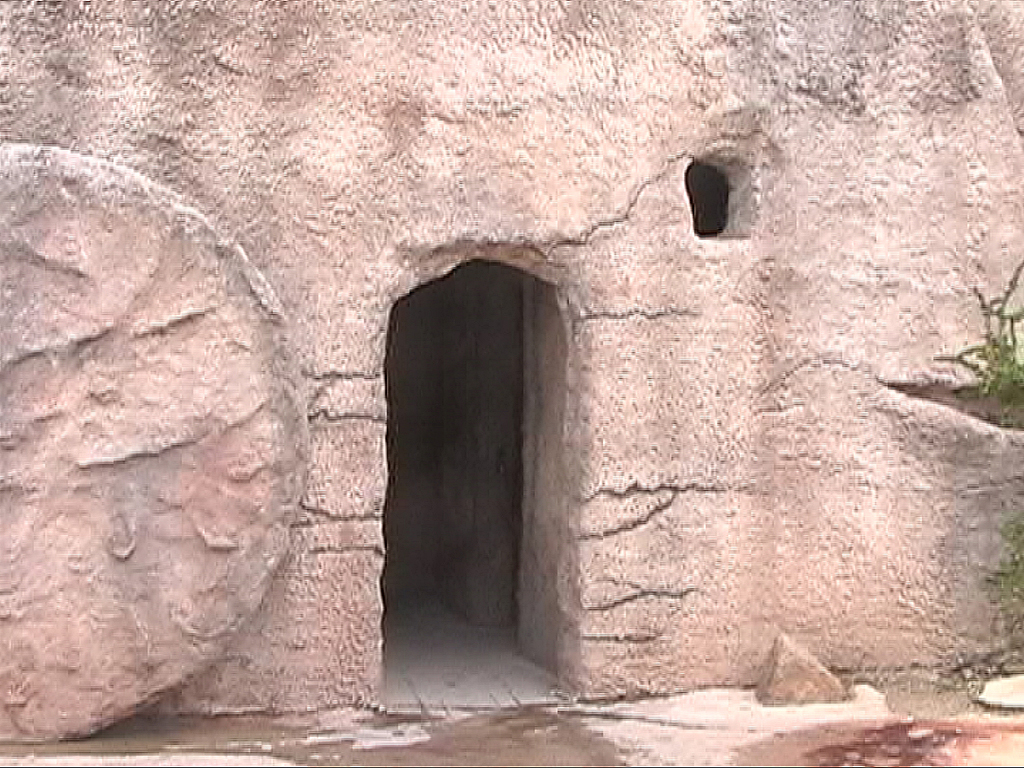
We start with Mary Magdalene. Mary went to the tomb looking for a body, but saw emptiness and suspected theft.
Here’s a woman who’s been the subject of some debate. Was she a prostitute? Or was she a wealthy woman? Was she condemned by those who were critical of women?
Filled with grief at the loss of the one who has already given her the promise of new life, she walks in the garden and encounters someone she thought was the gardener. She suspects that he might know where the body has disappeared to.
The simple way that Jesus’ speaks Mary’s name is striking. It’s when he says ‘Mary’ that she recognises him. In that moment her life is transformed, her old understandings turned upside down. In front of her stands the risen Lord. Disbelief and doubt and uncertainty are changed into faith and hope and trust.
The present reality of Easter is about God speaking each of our names. When God speaks our name, it’s not just a name, it’s about the whole of who we are. That same love and encounter that Jesus had with Mary are opened up for us on Easter Sunday.
Jesus began by appearing, not to the powerful or successful of his world; not to kings or governors, not even to the male apostles. Instead, he first appears to a woman.
The Resurrection is not about confirming the status quo of this world, but overturning the ways of the world so that people can see and experience life in new and unexpected ways.
Easter is about the transformation of the old ways of death and vengeance and anger and hatred, of oppression and climate injustice into new ways of life and love and hope and peace, for all people and the whole of creation.
Jesus comes to us as we are, he speaks to us in our need, he responds to our individual personalities, he addresses our strengths and weaknesses, he comes to us in our doubts and our bewilderments as well as our joys and our faith.
A second phrase from today’s gospel stands out that brings home the meaning of Easter for us today.
Jesus says ‘don’t hold on to me’. Mary wanted to hold on to the risen Lord, to pin him down, to keep him with her. But Jesus said that this wasn’t possible – that he had to go to be with the Father. He has yet further to travel in his risen life. He hasn’t become one person’s possession. He’s there for all people.
There are some who would say that what we are doing today on Easter Sunday is rather odd.
It’s odd because we’re marking something that took place so long ago and we’re saying it’s still of significance for us today.
We live in a culture which delights in the present moment. Last year is long gone. What matters is living to the full in each day as if there had been no yesterday and no shaping of today from previous years. It feels every day that what’s happening is changing. There’s not a lot of remembering what’s happened before, or analysing the longer term past, and how we’ve dealt with similar circumstances previously.
Easter is also seen to be odd because we’re celebrating something that defies aspects of contemporary scientific thinking – the rising of a person from death. There are those who will say that we live in a world in which everything has a rational explanation. There is no longer mystery, only puzzles which are on the way to being solved. Except that not a lot of time and energy is actually given to solving puzzles!
Out of this wrestling on this day with encounter and oddity and mystery, come two points about the significance of this day:
1stly, that there is mystery at the heart of Easter and 2ndly that there is celebration at the heart of Easter
Firstly, that there is mystery at the heart of Easter.
Some mysteries have a simple solution. For example ‘who’s the lottery winner this week?’ or ‘Who did it?’ in the TV ‘whodunnit’s we might follow. These mysteries we know we’ll eventually get the answer to.
There are other kinds of mystery that take more unravelling for example, ‘why on earth did X do Y?’ or ‘when does life begin, or life end?’ And at the moment there’s an interesting exploration going on as to what actually lies in outer space, as we see in the reporting of the flight round the moon.
It’s a dilemma of our age that nothing is allowed to stay as a mystery. People’s lives need to be unpacked or unpeeled, until like the onion, there’s nothing left but a pile of layers.
The mystery of Easter is one which points us to awe as well as analysis.
Mary Magdalene wanted to hold on to the risen Lord, to pin him down, to keep him with her. But Jesus said that this wasn’t possible – that he had to go to be with the Father.
It’s a great temptation, to want to hold on to things, to make sure life is pinned down, to want to keep our faith in ways that fit within our limited understanding.
The mystery of the Resurrection calls for awe and wonder at the God who has given the victory over death itself and who comes again and again in surprising ways to a broken and hurting world.
The second point is that there is celebration at the heart of Easter.
This celebration isn’t just a here today, gone tomorrow experience, as it might be, of a good party.
The celebration is that God makes a new reality possible, even out of the darkness of suffering and death.
Mary knew this when she heard her name called and her eyes were opened and she saw the Lord. She changed from disbelief to faith.
The Resurrection is an overturning of all the old assumptions about endings and what’s then possible and what’s not possible.
For Mary, being called by name was a sign of being known and being loved. It was a sign of a relationship that went beyond death itself, a sign of the new reality of God’s eternal kingdom.
In Acts the writer gives an analysis of the significance of what has happened. Peter is quoted as saying ‘I truly understand that God shows no partiality, but in every nation anyone who fears him and does what is right is acceptable to him.’ Here’s the universal promise of what God offers through the death and resurrection of Jesus. It’s not just for Jews, not just for one nation, but freely offered for all people, regardless of their ethnicity or gender or background.
We know that the inevitable ending for each one of us in this life is death. But the promise that God gives is that this is not the end. There is the promise of new life for each one. But for this promise to be fulfilled, it needs to be discovered anew in each age.
At Easter we come to see the reality of the new life that God offers, life that is possible even in the midst of the sadness and grieving of death.
The celebration at the heart of our faith is that we share in this new reality. This isn’t just a distant memory of a long gone event. We too are known by name by the risen Lord; we too know that God’s love is not only for us, but for all people.
This day reminds us that there is mystery at the heart of our faith, mystery which leads us to awe at God’s graciousness, love and power.
This day reminds us that there is celebration at the heart of our faith – celebration of the new reality that God made possible at one time, for all time.
And we too are called to respond, as the psalmist did, with exuberant gratitude and as Mary and the disciples did, witnessing to what they had seen and believed.
We are called to work and witness for the power of God’s transforming love to become more rooted in this troubled and changing world.
Thanks be to God for the promise of new life in Christ.